













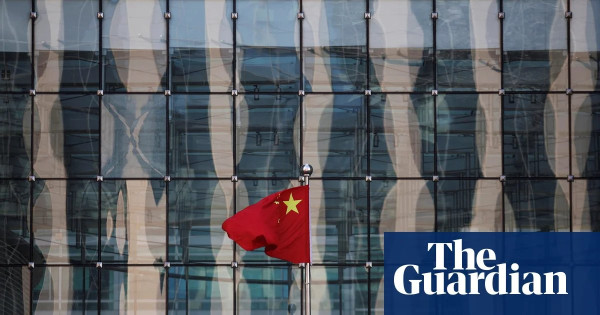
China prepares £40bn stimulus for financial sector amid fears over sluggish growth
China will inject $54 billion (£40 billion) into its financial sector as Beijing attempts to support banks and insurers facing sluggish economic growth. Various financial institutions are set to receive billions of yuan from state entities, including the Ministry of Finance and the China National Tobacco Corporation. This stimulus aims to enhance the financial sector’s capacity to invest in the stock market and provide loans to businesses as the world’s second-largest economy struggles with weak growth.
The largest life insurer in China, China Life Insurance, will receive 35 billion yuan, while China Taiping Insurance Group will get 7 billion yuan. The People’s Insurance Company of China plans to raise up to 15 billion yuan through a private placement of A-shares, with proceeds designated for capital replenishment. The initiative is intended to bolster state insurers that have been directed to support the stock market with long-term funds and assist regulators in managing smaller, higher-risk insurance firms.
The insurance sector has been facing challenges due to low profitability and deteriorating solvency ratios among many small to mid-sized insurers. China Life stated that the capital injection is a crucial step to enhance the financial sector's ability to serve the real economy and promote high-quality development in the financial and insurance industries. Additionally, three state lenders announced they would receive a combined 290 billion yuan in capital injections, which were first proposed during a parliamentary meeting in March.
Volcanic eruption halts flights at Jakarta and seven other Indonesian airports
Operations at eight airports in Indonesia, including the main international hub in Jakarta, were suspended on Sunday due to an ash cloud from the Anak Krakatau volcano. The eruption, which occurred on Saturday, produced lava and sounds heard up to 435 miles (700 kilometers) away, as reported by Indonesia's geology agency. Two additional eruptions were recorded on Sunday, prompting authorities to extend the shutdown at Soekarno-Hatta International Airport until 9:30 PM local time.
The suspension affected hundreds of flights, including international services. Singapore Airlines canceled flights to and from Jakarta for the remainder of Sunday, while Qantas faced disruptions, including cancellations. The airline emphasized that safety remains its top priority and is closely monitoring conditions. Volcanic ash poses significant risks to aircraft, potentially damaging engines and clogging systems.
The ash cloud reached altitudes of 6,000 meters (20,000 feet) on the Java side and 15,000 meters on the Sumatra side. Local schools canceled activities, and fishing trips were also suspended due to eye irritation reported among residents. The disaster mitigation agency BNPB announced plans for weather modification operations, including cloud-seeding, to encourage rainfall that would help clear the ash. More than 22,000 passengers and 209 flights were affected, particularly those traveling to Singapore, with at least 16 domestic flights to Bali canceled. Anak Krakatau, a volcano that emerged after the 1883 eruption of Mount Krakatau, has been intermittently active since its formation.
Photo provided by : The Guardian
@hoju-korean.com Editorial Team























댓글목록0