













![[Summary News] Louisiana Firefighters Rescue African Serval Amid Ongoing Global Issues](https://hoju-korean.com/data/world_news/thumb-20260918_210155_9b862bd5_600x315.jpg)
Louisiana firefighters find feline native to sub-Saharan Africa while responding to house fire
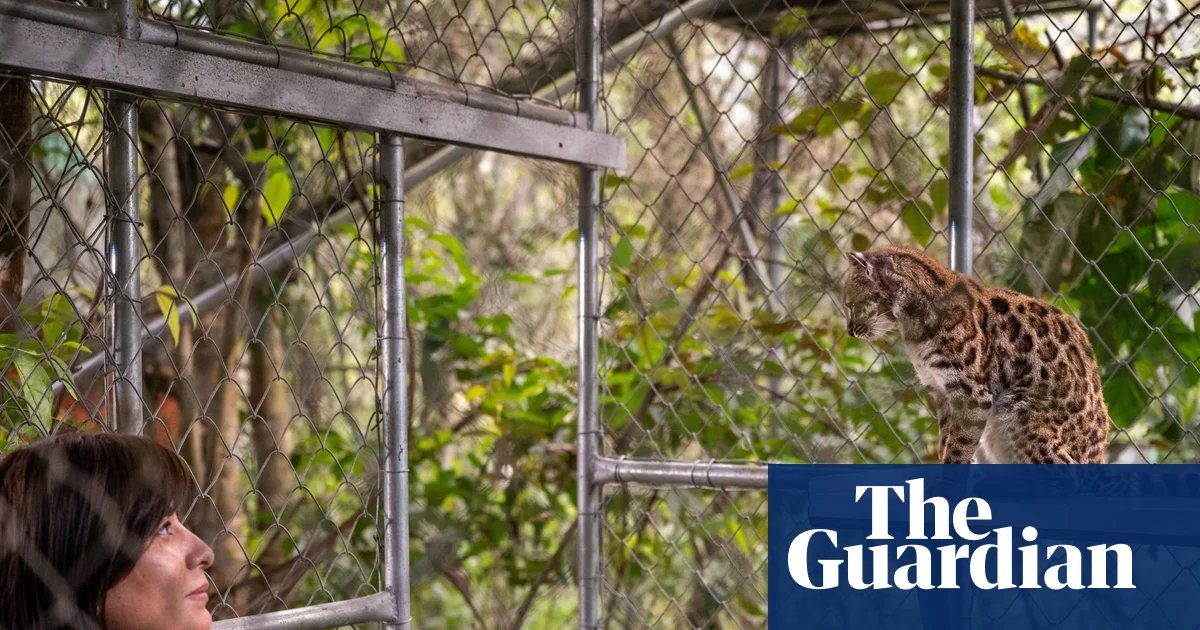
Louisiana firefighters responding to a minor house fire in Marrero discovered a wildcat, an African serval, illegally kept in the backyard. The incident occurred on a Tuesday afternoon when firefighters were alerted to the fire at a residence in the suburban New Orleans area. Upon investigation, they found the serval confined within a chain-linked enclosure resembling a small baseball batting cage. Local animal protection services, represented by Jefferson Protection and Animal Welfare Services (JPaws), were called to the scene to assist. JPaws officials confirmed that the homeowner lacked the necessary exotic animal permit required by local laws to keep a serval as a pet.
Michelle Brignac, JPaws' director, and Victoria Clark, a humane department supervisor, arrived promptly to help rescue the serval. They subdued the animal, which was hissing in distress, and transferred it into a transport carrier. The serval was then taken to JPaws' facility in Harvey, Louisiana, where it was given a dedicated room to ensure its comfort while the agency sought a suitable long-term habitat. Servals are known for their striking appearance and remarkable ability to leap up to 7 feet high, which poses challenges for their care in captivity.
Experts at JPaws emphasized that servals are not suitable pets due to their specialized needs and natural behaviors that cannot be adequately met in a domestic setting. The agency noted that servals require ample space to roam and engage in natural behaviors, which is often lacking in captivity. As a result, these animals can experience chronic stress and exhibit aggressive behavior as they mature. JPaws is exploring options for the serval's temporary housing at New Orleans' Audubon Zoo, although the zoo has indicated it does not plan to accept the animal at this time.
The incident reflects a broader trend of increasing ownership of exotic pets, a practice that raises concerns among animal welfare advocates. The serval found in Marrero is one of many such cases highlighting the complexities of keeping exotic animals as pets and the legal implications involved.
‘We demand the truth’: Olga Tokarczuk and JM Coetzee lead calls for proof of life of disappeared Eritrean writers
More than 180 writers have signed an open letter to Eritrean President Isaias Afwerki, demanding proof of life for 12 writers who were arrested in 2001. The letter, dated September 18, coincides with the 25th anniversary of a government crackdown on independent journalism in Eritrea. Nobel laureates Olga Tokarczuk and JM Coetzee are among the prominent figures urging the Eritrean government to provide information about the detained writers, including poet Amanuel Asrat and journalist Dawit Isaak.
The letter highlights the ongoing silence regarding the health and whereabouts of the imprisoned writers, characterizing it as a violation of international law and an act of cruelty. The signatories express solidarity with the families of the detained individuals and the broader literary community, emphasizing the need for accountability. The letter lists the names of the twelve writers, calling for immediate, verified proof of life for each of them.
The signatories include notable authors such as Colm Tóibín, Elif Shafak, and Isabel Allende, among others. The letter stresses that Eritrea's future should be built on the contributions of its brightest minds rather than their suppression. The writers urge the Eritrean government to cease its oppressive tactics against those who peacefully express their views.
PEN International has also launched a public petition seeking proof of life for the detained writers. The president of PEN International, Burhan Sönmez, remarked on the unbearable nature of the families' uncertainty after 25 years without knowledge of their loved ones' fates. The letter concludes with a commitment to continue advocating for the missing writers until they are freed.
Weather tracker: Thunderstorms hit Spain as Japan braces for typhoon
Intense thunderstorms swept through eastern Spain on Wednesday afternoon, resulting in severe flooding and at least one confirmed death. The storms initially impacted the Castilla-La Mancha region before moving toward Spain's east coast, where they became slow-moving and continued overnight. Torrential rainfall, strong winds, and large hail were reported in cities such as Valencia and Barcelona, leading to widespread disruption.
Weather stations near Barcelona recorded over 100mm of rain within a few hours, with some areas experiencing 70mm in just 30 minutes. The flooding caused significant damage, submerging cars and roads, and led to the cancellation of flights across the region. The La Liga football match between Levante and Athletic Club was postponed due to flooding at the Estadio Ciudad de Valencia.
Rescue teams discovered the body of a man near Olivella, west of Barcelona, after his vehicle was swept away by floodwaters. Spain's east coast is particularly vulnerable to extreme rainfall during the autumn months, a trend exacerbated by higher Mediterranean Sea temperatures that fuel thunderstorms. This year's storms follow a pattern of devastating floods in previous years, including a 2024 incident that resulted in over 200 fatalities in Valencia.
In the United States, extreme rainfall also disrupted the Racefaster half marathon in New Jersey, where participants had to wade through chest-deep water due to heavy downpours. Meanwhile, Tropical Storm Dujuan, currently over the Pacific Ocean, is forecasted to strengthen into a category one typhoon as it approaches Japan. The storm is expected to affect southeastern Japan, including Tokyo, in the coming days.
Revealed: how Russia uses mobile ‘super-app’ Max to spy on its citizens
In the past 18 months, millions of Russians have been compelled to install a new messaging and payment app called Max, which has gained popularity as a patriotic alternative to Telegram and WhatsApp. Developed by VKontakte, a social media company closely linked to the Russian state, Max has become the most-used messaging app in Russia. Reports indicate that President Vladimir Putin has an indirect stake in the app.
Max functions as a "super-app," integrating various services into a single platform, including banking, messaging, and government services. Unlike WeChat in China, which has developed over decades, Max has been imposed on a population that previously enjoyed relative internet freedom. Forensic research has uncovered Max's extensive surveillance capabilities, which provide a "backdoor" into users' devices.
Experts assert that Max allows the Russian government to monitor users without their consent, including the ability to take screenshots and access information stored within its mini-apps. The app can even impersonate users and inject code into other applications, raising concerns about potential cyberattacks. While Max cannot infiltrate Telegram and WhatsApp, both platforms are banned in Russia.
Many Russians, especially those working in state institutions, have been pressured to adopt Max for communication. This includes teachers and students who have faced directives from authorities to switch to the app. The implementation of Max illustrates how authoritarian regimes can leverage technology to enhance surveillance and control over their populations.
Russians go to polls against backdrop of Ukraine war and Putin’s tightening grip
Russians are preparing to vote in the State Duma elections amid a tightly controlled environment that lacks meaningful competition. Vladimir Putin's United Russia party is expected to maintain its dominance in parliament, alongside a few nominal opposition parties that align with the Kremlin. The three-day voting period begins on Friday, with results anticipated after polls close on Sunday.
This election marks the first Duma vote since the full-scale invasion of Ukraine in 2022, a conflict that has increasingly permeated daily life for many Russians. Ukrainian drone strikes have targeted various locations across Russia, raising public anxiety about the war's trajectory. In response, the Kremlin has further tightened its grip on political opposition.
Last month, the authorities excluded the liberal anti-war party Yabloko from the ballot, eliminating the last significant challenge to the Kremlin's policies. This leaves a selection of parties, including the Communists and far-right Liberal Democrats, which are permitted to criticize the government but ultimately support its agenda. These parties have served as a political outlet for discontent without posing a genuine threat to United Russia's dominance.
Political analysts note that this election cycle appears particularly subdued, with many candidates avoiding the spotlight and failing to campaign actively. Televised debates have been lackluster, with empty studios and minimal engagement from politicians. United Russia's campaign has relied on low-budget production, lacking memorable messages or promises. The Kremlin's strategy aims to downplay public interest, hoping to minimize voter turnout among disillusioned citizens.
Taking on Trump: Canada and EU forge closer ties – The Latest
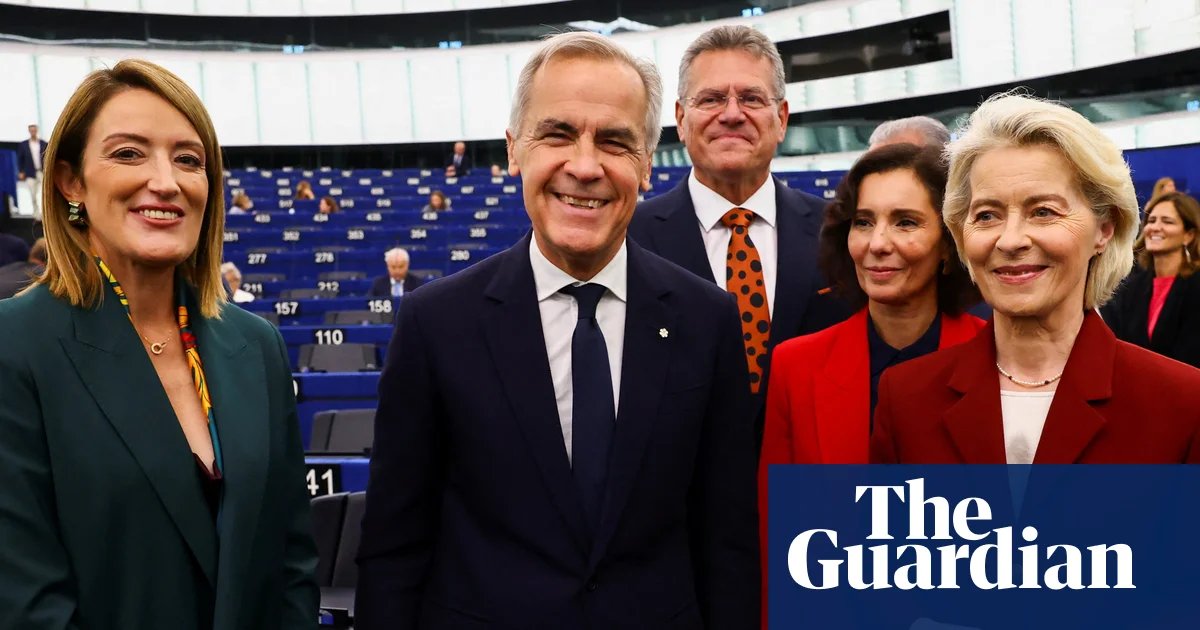
Canadian Prime Minister Mark Carney has expressed support for the European Union's proposal to make Canada its first "associate member," despite threats from U.S. President Donald Trump. Trump warned that the U.S. could impose severe tariffs or halt trade if the EU pursued this plan. In a bold address to the European Parliament, Carney emphasized the need for "deep cooperation" between Canada and the EU, highlighting that polling indicates strong support among Canadians for closer ties with Europe.
Ireland to boycott Eurovision again over Israeli participation and ongoing Gaza deaths
Ireland has announced it will boycott the Eurovision Song Contest for the second consecutive year due to the ongoing humanitarian crisis in Gaza. The decision follows a previous boycott by Ireland and other countries, including Iceland and the Netherlands, in protest against Israel's involvement in the competition. The national broadcaster, RTÉ, stated that participation could not be justified given the tragic loss of lives in Gaza.
RTÉ confirmed its decision to withdraw from the 2027 competition, aligning with the Dutch broadcaster Avrotros, which also announced a boycott. The European Broadcasting Union (EBU), which organizes Eurovision, is in discussions with other Dutch broadcasters to find a participant. Eurovision's director expressed regret over Ireland's decision but acknowledged their right to withdraw.
The EBU has attempted to address concerns regarding Israel's participation, including reducing the number of votes cast online in response to allegations of vote manipulation. The organization has also stated that broadcasters from countries involved in armed conflicts would not be eligible to host the contest. The ongoing violence in Gaza has prompted widespread protests against Israel's participation in Eurovision, which has been a competitor since 1973.
Reports indicate that over 73,000 people have died in the conflict, which escalated after a Hamas attack in October 2023. The situation has drawn international attention and criticism, prompting countries like Ireland to take a stand against the contest.
Poland warns Russia planning ‘hybrid strikes’ against countries supporting Ukraine – as it happened
Polish Prime Minister Donald Tusk has alerted the public to intelligence suggesting that Russia is planning hybrid strikes using drones and missiles against countries supporting Ukraine, including Poland. Tusk described the intelligence as "very consistent and convincing," indicating that Russia may disguise these attacks as accidental incidents to weaken NATO's resolve. He warned that such provocations could undermine NATO's integrity and challenge the alliance's commitment to collective defense.
Tusk emphasized the potential for drones or projectiles to be launched into NATO member states, which could lead to significant damage while allowing Russia to maintain plausible deniability. He expressed concern that these tactics would illustrate NATO's inability to respond decisively to threats, thereby eroding confidence in the alliance.
The Polish Prime Minister characterized the upcoming autumn and winter as critical periods during which Russia may intensify its aggression toward Ukraine and its supporters. He affirmed Poland's readiness to respond resolutely to any attacks, underscoring the importance of solidarity among NATO allies in the face of these threats.
Iranian actor Laheh Marzban faces severe threats after Venice film festival speech
Iranian actress Laleh Marzban has faced backlash from authorities and state media following her acceptance speech at the Venice Film Festival, where she highlighted the struggles of women in Iran. Marzban, who won the best newcomer award for her role in the film "Falling House," dedicated her victory to the women of Iran, acknowledging the high price they pay for freedom.
In her speech, Marzban expressed solidarity with her fellow Iranians during difficult times, urging them to maintain hope. The Supreme Council of the Cultural Revolution, a conservative government body, condemned her remarks as a distorted portrayal of Iranian society. State-affiliated media launched a coordinated attack against Marzban, with some calling for her to be punished for her statements.
Critics from Iranian media accused Marzban of being disloyal and urged the government to prevent her from working in Iran. The backlash against her speech reflects the broader tensions surrounding artistic expression and freedom of speech in Iran, particularly regarding women's rights. Marzban's film, which addresses patriarchal structures, has also drawn scrutiny from Iranian authorities.
The reaction to Marzban's speech mirrors previous controversies involving films that challenge the government's narrative, highlighting the risks faced by artists in Iran. The situation underscores the ongoing struggle for freedom of expression within the country.
YouTube star Ms Rachel to match Macklemore’s $1m Palestine aid donation
YouTube star Ms Rachel, known for her children's entertainment content, has announced she will match rapper Macklemore's $1 million donation to organizations supporting Palestinian causes. This announcement comes after Macklemore's controversial comments during a concert where he expressed support for Palestine, leading to his removal from Ed Sheeran's tour. Ms Rachel, whose real name is Rachel Accurso, shared her commitment on Instagram, emphasizing the urgent need for humanitarian aid, particularly for children affected by the ongoing conflict.
Accurso stated that her donation would go to the Palestine Children’s Relief Fund, highlighting the devastating impact of the conflict on Palestinian children. She called upon other public figures to contribute similarly, urging those with platforms to use their influence for humanitarian efforts. Accurso has been vocal about the plight of Gaza's youth amid the ongoing war with Israel.
Macklemore's remarks during a performance sparked backlash from Israel-aligned groups, leading to significant media attention. Despite the controversy, he reaffirmed his commitment to advocating for peace and human rights. Both Macklemore and Accurso's donations have garnered support from other artists, with several supporting acts withdrawing from Sheeran's tour in solidarity with Macklemore.
The contributions from Accurso and Macklemore reflect a growing trend among public figures to engage in humanitarian efforts related to the conflict, showcasing the intersection of celebrity influence and social activism.
Photo provided by : The Guardian
@hoju-korean.com Newsroom






![[Summary News] Louisiana Firefighters Rescue African Serval …](https://hoju-korean.com/data/world_news/20260918_210155_9b862bd5.jpg)


![[Summary News] Canada and EU Strengthen Ties Amid US Threats…](https://hoju-korean.com/data/world_news/20260917_210129_3ec71c04.jpg)

![[Summary News] Michelin-Starred Restaurant Fined for Serving…](https://hoju-korean.com/data/world_news/20260916_210156_f2b5cddd.jpg)






댓글목록0