














New cat species identified for first time in more than a century in Bolivia
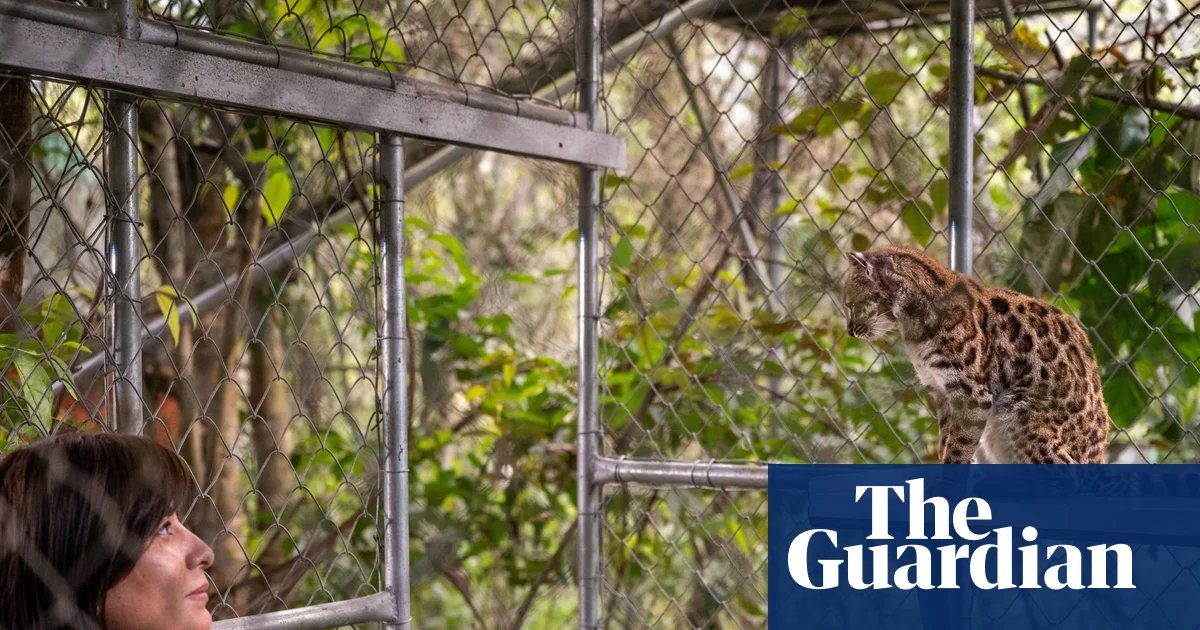
A diminutive wild cat inhabiting Bolivia's cloud forest has been identified as a previously unknown species. This marks the first time a new living feline species has been formally named and described in over a century. The cat, referred to as tilcayo by local communities, belongs to a group known as tiger cats, which are found throughout much of South America. Researchers discovered this cat in Bolivia's lush Yungas forest, a mountainous region characterized by cloud cover and high humidity.
The tilcayo measures approximately 18 inches (46 centimeters) in length and weighs around 3 pounds (1.4 kilograms), making it smaller than the average domestic cat. Genetic data was utilized to confirm that this cat is a distinct species, leading to the scientific name Leopardus tilcayo, while retaining its local name. Paola Nogales-Ascarrunz, a National Geographic explorer and co-author of the study, described the cat's appearance, noting its light brown fur adorned with irregularly shaped rosettes.
Currently, little is known about the cat's biology and lifestyle. However, scat samples containing remains of small rodents suggest that these may form part of its diet. Evidence from camera traps indicates that the tilcayo might be more active at night. Tiger cats are classified as cryptic species, meaning they are not easily distinguishable by appearance alone. Jonas Lescroart, an evolutionary biologist and co-lead author of the study, highlighted that tiger cats had previously been regarded as a single species.
Genetic studies conducted decades ago hinted at the existence of multiple species within the tiger cat lineage. Lescroart mentioned that the current information is limited to the two live individuals examined and a small number of camera-trap records. One of these individuals is a 10-year-old male that now resides in the Senda Verde wildlife sanctuary in Bolivia, having been kept as a pet by a local family.
The observation of this Bolivian cat sparked interest because its characteristics did not align with descriptions based primarily on Brazilian tiger cats. This discrepancy prompted researchers to question what species of tiger cat actually exists in Bolivia. The research team analyzed DNA from 38 cats across several South American countries, including eight museum specimens. Their findings revealed that tiger cats consist of five genetically distinct species.
The researchers did not anticipate that the Bolivian tiger cat would be classified as a separate species, as it had never been proposed as a distinct animal, subspecies, or otherwise. Genetic analysis indicated that the lineage of the tilcayo separated from other tiger cats approximately 1.4 million years ago. Lescroart explained that greater differences in DNA suggest a longer time of physical separation, which typically indicates a species-level divide among cats. The research team also described a new subspecies of tiger cat found in Peru's Yungas region.
Photo provided by : The Guardian
@hoju-korean.com Newsroom







![[Summary News] Canada and EU Strengthen Ties Amid US Threats…](https://hoju-korean.com/data/world_news/20260917_210129_3ec71c04.jpg)





![[Summary News] Michelin-Starred Restaurant Fined for Serving…](https://hoju-korean.com/data/world_news/20260916_210156_f2b5cddd.jpg)



![[Summary News] Lithuania and Denmark Face Increased Tensions…](https://hoju-korean.com/data/world_news/20260915_210120_b0971ee5.jpg)








댓글목록0