







US to bar some South Africans over claims of anti-white discrimination
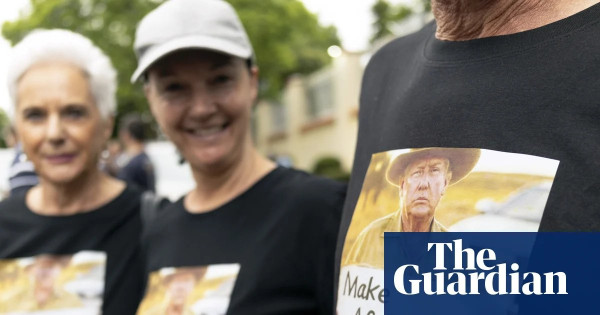
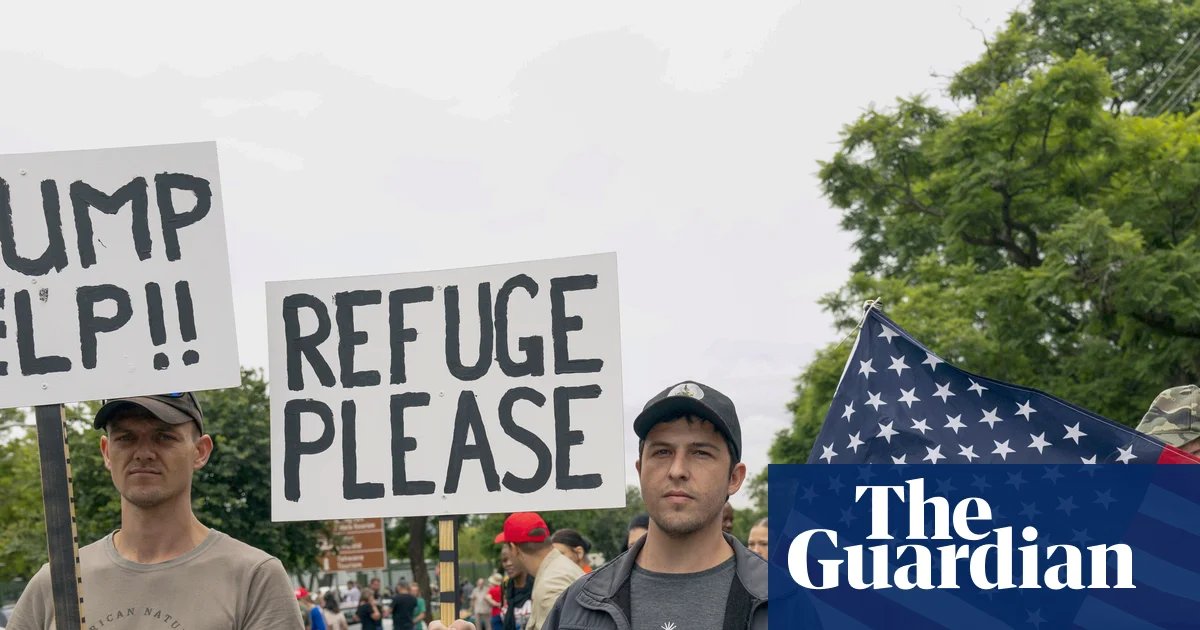
The United States has announced visa restrictions targeting certain South Africans, following claims from the Trump administration that the South African government discriminates against the white minority Afrikaners. The announcement did not specify which individuals would be affected by these restrictions. President Trump has repeatedly asserted that a "white genocide" is occurring in South Africa and has criticized the country's affirmative action policies.
Since the beginning of last year, the US has reduced aid to South Africa, excluded it from the G20 summit in Miami, and initiated a refugee program for Afrikaners and other racial minorities in the country. Simultaneously, the Trump administration has been dismantling refugee and asylum programs for individuals fleeing conflict and persecution. US Secretary of State Marco Rubio stated that the South African government is failing its citizens by destroying the economy through an obsessive focus on racial grievances against the Afrikaner minority.
Rubio asserted that the South African government has not adequately addressed issues such as rural crime, violent rhetoric, and discriminatory policies against Afrikaners and other minority groups. The visa restrictions will target foreign nationals who promote race-based discrimination, incite violence, or facilitate land confiscation without compensation in South Africa.
Leo Brent Bozell III, the US ambassador to South Africa, indicated on social media that the visa restriction policy is just the beginning of a series of measures that will demonstrate America’s commitment to the issue. In response, South Africa's foreign ministry claimed that its policies are being misrepresented. Spokesperson Chrispin Phiri stated that the announcement aligns with the mischaracterization of South Africa’s domestic policies by fringe groups misleadingly portraying themselves as representatives of minorities and Afrikaners.
Phiri emphasized South Africa's sovereign right to implement laws addressing historical racial injustices. He acknowledged that the United States may hold differing views on these measures. Afrikaners, descendants of Dutch and French settlers, ruled South Africa during the apartheid era, which involved severe discrimination against the black majority. Since Nelson Mandela became South Africa’s first black president in 1994, subsequent governments have attempted to rectify racial inequalities through various policies, including Black economic empowerment and land redistribution.
Despite these efforts, the economic gap remains significant, with white South Africans typically possessing 20 times the wealth of their black counterparts.
Battle of Chile director Patricio Guzmán dies aged 85
Patricio Guzmán, the renowned filmmaker who documented Chile's tumultuous political landscape during the 1970s, has passed away at the age of 85. Guzmán died on Tuesday in Paris due to a cardiorespiratory arrest, according to reports from Chilean news outlet Emol. His work, particularly films like The Battle of Chile and Nostalgia for the Light, focused on the violence and political strife that followed Augusto Pinochet's coup against elected President Salvador Allende in 1973.
Guzmán expressed that the impact of Pinochet's dictatorship profoundly influenced his life and career. He once remarked that he was marked by the dictator's regime and could not escape its effects. Despite this, he resisted labeling himself strictly as an activist or political filmmaker, stating that his films are metaphorical and interpret reality through a personal lens.
Born in Chile in 1941, Guzmán began his career in advertising before pursuing film studies in Chile and Madrid. Upon returning to Chile, he was inspired by the political climate following Allende's election in 1970. This led to the creation of The Battle of Chile, a comprehensive documentary that captured the events surrounding Pinochet's coup and Allende's subsequent suicide.
The film includes harrowing footage, including the moment camera operator Leonardo Henrichsen was shot while filming. Guzmán received support from French filmmaker Chris Marker, who provided essential film stock and connections for the project. Although Guzmán was arrested during this period, he was eventually released, while cinematographer Jorge Müller was not as fortunate, facing torture and disappearance in 1974.
Guzmán completed The Battle of Chile while in exile, releasing its three parts—The Insurrection of the Bourgeoisie (1975), The Coup d’État (1976), and Popular Power (1979)—throughout the late 1970s. The documentary has been praised for its compelling portrayal of the era. In the mid-1990s, he revisited the themes of his earlier work in Chile, Obstinate Memory, marking his return to the country after 25 years away.
In 2001, he directed The Pinochet Case, which examined the former dictator’s arrest in London in 1998. Later, Guzmán shifted focus to more abstract themes, creating a trilogy that included Nostalgia for the Light, The Pearl Button, and The Cordillera of Dreams, which explored Chile's history through its natural landscapes. His final film, My Imaginary Country, premiered in 2022 and addressed the significant street protests that occurred in Chile in 2019.
Photo provided by : The Guardian
@hoju-korean.com Newsroom




![[Summary News] Michelin-Starred Restaurant Fined for Serving…](https://hoju-korean.com/data/world_news/20260916_210156_f2b5cddd.jpg)
![[Summary News] Lithuania and Denmark Face Increased Tensions…](https://hoju-korean.com/data/world_news/20260915_210120_b0971ee5.jpg)
![[Summary News] Swedish Elections Show Narrow Lead for Centre…](https://hoju-korean.com/data/world_news/20260914_210120_bdd5c6d8.jpg)


댓글목록0