












![[Summary News] Michelin-Starred Restaurant Fined for Serving Ants; Former Kosovo President Sentenced for War Crimes](https://hoju-korean.com/data/world_news/thumb-20260916_210156_f2b5cddd_600x315.jpg)
Michelin-starred Seoul restaurant fined for serving dessert topped with ants
A South Korean court has imposed fines on the operator of Evett, a two-Michelin-star restaurant in Gangnam, and its chief executive for serving a dessert topped with ants, which are not approved for consumption under local food safety laws. The restaurant's operator was fined 10 million won, approximately £5,400, while the chief executive received a fine of 15 million won. Prosecutors had sought a one-year prison sentence for the chief executive and a 20 million won fine for the restaurant.
Judge Lee Se-chang of Seoul's western district court described the offense as serious, noting the duration the dishes were sold, the restaurant's promotional use of them, and test results indicating heavy metals in the ants above allowable levels. The judge considered the defendants' admission of guilt, the chief executive's lack of prior offenses under food safety law, and the fact that the number of ants served was less than prosecutors had estimated.
The court acknowledged that ants are consumed in the US and Europe, suggesting that the restaurant may not have realized they were not permitted in South Korea. Both the restaurant and the chief executive have seven days to appeal the ruling. Evett was founded by Australian chef Joseph Lidgerwood, who has not been charged and is not a defendant in this case.
Under South Korean food safety regulations, only ten insect species are approved for consumption, including grasshoppers and mealworms. Any business wishing to use unapproved insects must obtain temporary approval from the Ministry of Food and Drug Safety, which Evett did not pursue. Violating this law can result in a maximum penalty of five years in prison or a fine of up to 50 million won.
The ministry initiated its investigation after discovering mentions of the ant dishes in social media and blog posts. Prosecutors revealed that the restaurant imported dried ants from the US and Thailand starting in April 2021 and served them atop a sorbet until January 2025. They estimated that approximately 12,274 customers were served this dessert, resulting in about 120 million won in revenue.
Lawyers for the restaurant contested the prosecution’s figures, arguing that only about 60 percent of customers accepted the ant topping. The restaurant stated that ants were included in only a few of the 15 courses on their menu and pointed out that other countries, such as Denmark and the UK, also use ants in their cuisine. Insect consumption is not unusual in South Korea, with beondegi, or steamed silkworms, being a common snack.
Former Kosovo president Thaçi sentenced to 25 years in prison by international court in The Hague
Hashim Thaçi, the former president of Kosovo and a commander of the Kosovo Liberation Army (KLA), has been sentenced to 25 years in prison by an international court in The Hague for war crimes committed during the conflict with Serbia in the late 1990s. The court found him criminally responsible for a campaign of murder, torture, and repression against opponents and ethnic minorities during the KLA’s uprising against Serbian forces.
The proceedings have faced significant backlash in Kosovo and neighboring Albania, where Thaçi is still regarded as a national hero by many. Supporters gathered in Kosovo to hear the verdict, with some expressing their discontent by booing and chanting his name. The court's findings detailed that Thaçi and three co-defendants were responsible for arbitrary detention, cruel treatment, torture, and murder, although they were acquitted of crimes against humanity due to insufficient evidence of a systematic attack against civilians.
The trial panel highlighted that the defendants significantly contributed to the common criminal purpose of targeting perceived enemies of the KLA, which included Kosovo Albanians associated with rival political groups and ethnic minorities. The conflict, which lasted from 1998 to 1999, saw both Serbian and Kosovar forces accused of committing war crimes.
The KLA's actions during the war have long been a contentious topic in Kosovo, with many still supporting the organization despite the court's findings. The verdict has sparked protests and emotional responses from Thaçi's supporters, who view the trial as unjust. The international court's role has been criticized, with many in Kosovo believing that it undermines the country's sovereignty and historical narrative.
The court's ruling is a significant moment in the ongoing efforts to address the legacy of the Kosovo conflict and hold accountable those responsible for war crimes. Thaçi's conviction may impact the political landscape in Kosovo, where he has been a dominant figure for decades. The trial's outcome could also influence the perceptions of justice and reconciliation in the region.
European Union opens door for Canada to become first associate member
The European Commission President, Ursula von der Leyen, has expressed interest in making Canada the first associate member of the European Union (EU). This initiative was announced during her annual state of the European Union address, where she emphasized the need for closer economic and security ties between Canada and Europe, particularly in light of the challenges posed by U.S. policies under former President Donald Trump.
Canadian Prime Minister Mark Carney welcomed the proposal, highlighting the potential for a unique alliance that would reduce Canada's reliance on U.S. trade. Von der Leyen noted that the partnership would build upon the existing Comprehensive Economic and Trade Agreement (CETA) and aim for a broader "alliance for the future."
The proposed partnership would encompass various sectors, including advanced manufacturing, technology, defense production, and energy, with a focus on shared democratic values. Von der Leyen stated that the relationship is not intended to be adversarial but rather a collaborative effort to bolster mutual strengths.
The announcement received a positive response from European lawmakers, who gave Carney a standing ovation during his address. The partnership aims to create a common prosperity and economic security space between Canada and the EU.
This move comes amid rising concerns in Canada about its economic dependence on the United States, prompting Ottawa to seek stronger ties with Europe. The partnership is seen as a way to enhance Canada's position on the global stage while fostering cooperation on pressing issues such as climate change and technological advancement.
The EU's initiative reflects a broader strategy to strengthen alliances with like-minded nations in an increasingly complex geopolitical landscape. The potential associate membership could pave the way for deeper integration and collaboration between Canada and European countries.
UK mathematician debunks myth around Parthenon’s optical illusions
A mathematician from the University of Oxford has challenged long-held beliefs about the Parthenon, the iconic temple in Athens, by investigating its supposed optical illusions. For over two millennia, scholars have praised the Parthenon’s architects for their clever use of geometry, claiming that its subtle curves correct optical distortions that would otherwise affect its appearance.
Professor Alain Goriely conducted a detailed analysis and mathematical modeling, concluding that the optical illusions attributed to the Parthenon are either exaggerated or nonexistent. He traced the origins of this myth back to the writings of Vitruvius, a Roman architect who described the Parthenon centuries after its construction, which has since been perpetuated in architectural literature.
One of the primary claims Goriely examined is the curvature of the Parthenon’s base, which rises slightly in the center. Vitruvius suggested this was to counteract an illusion that would make the base appear to sag. However, Goriely found no evidence supporting this theory, stating that the sagging effect attributed to long horizontal lines is not substantiated by measurements.
Additionally, Goriely investigated the bulges in the Parthenon’s columns, known as entasis, which were thought to correct the illusion of narrowness. His research indicated that the bulge is minimal, measuring only 18mm, and is hardly perceptible from typical viewing distances.
The mathematician suggested that the architects of the Parthenon may have had other reasons for these design choices, such as preventing rainwater accumulation or achieving a more organic aesthetic. Goriely’s findings challenge the narrative that the Parthenon’s design was solely focused on correcting optical illusions.
His research raises questions about why these myths have persisted for so long, suggesting that the perception of ancient Greece as a pinnacle of architectural achievement might contribute to their endurance. The study has been published in the journal Royal Society Open Science.
Students in Gaza ‘devastated’ after plan for them to study in Belgium fails
Students in Gaza who had secured scholarships to Belgian universities expressed their devastation after Belgium's government failed to reach an agreement on an evacuation plan. Thirteen students and researchers, including Ahmed Abujami, were left unable to leave the war-torn territory. Abujami, a 28-year-old doctor, had hoped to study public health at the Institute of Tropical Medicine in Antwerp.
He described his disappointment after the Belgian coalition government could not finalize a plan to facilitate their exit. Abujami stated that the ongoing war has already caused significant losses, and the possibility of missing another academic year is heartbreaking.
Many of the students are unable to apply for visas to Belgium, as the application must be done in person in Jerusalem or Cairo, and they are currently blocked from leaving Gaza. Salwa Abu Elhaj, another student who aspired to study communications at KU Leuven, voiced her concerns about the uncertainty of her future. She has been living in a tent with her family after their home was destroyed.
Ahmed Alsalibi, a computer science professor, also expressed pain over the situation, as he was awarded a fellowship at the Free University of Brussels. He pointed out that although his visa has been approved, he cannot collect it in person due to the blockade.
The students have followed all necessary procedures to secure their scholarships and are frustrated that their academic futures are jeopardized by political disagreements. European countries like Italy and the UK have previously negotiated evacuations for students and researchers, raising questions about why Belgium has not done the same.
Rectors from seven Belgian academic institutions have expressed outrage at the situation, emphasizing the importance of supporting these students who have worked hard to earn their places in their respective programs. The students remain hopeful that the Belgian government will ultimately find a solution to facilitate their evacuation.
Russia plotting to kill Ukraine allies in US and Europe, FBI says
The FBI has revealed that Russia's intelligence services are allegedly plotting targeted killings of individuals in the United States and Europe who support Ukraine. Federal authorities announced charges against five individuals connected to this network, which remains at large. The indictment, unsealed in Manhattan federal court, outlines a scheme where Russian operatives paid individuals to surveil and potentially kill designated targets.
James Barnacle Jr., head of the FBI's New York office, stated that the agency disrupted these plans through extensive investigative work. The network had been recruiting individuals to carry out acts of terrorism against both civilian and military infrastructure in countries aligned with Ukraine.
Darren Cox, head of the FBI's Washington DC office, emphasized the collaboration among various FBI field offices and partner agencies in thwarting Russia's attempts to conduct violent acts. He noted that the threat was identified early, prompting swift action to hold the Russian government accountable.
The indictment alleges that the network has been active since at least 2024, conducting attacks and murders globally, including within the United States. Initially, the network focused on Russian dissidents but has recently shifted its attention to nations perceived as allies of Ukraine.
The indictment details an incident where a U.S. resident was recruited to surveil a prominent Russian dissident believed to be in the U.S. This individual was given instructions for surveillance and promised substantial payment for carrying out the murder. However, the U.S. resident ultimately declined the offer.
The FBI's actions highlight the ongoing threats posed by Russian intelligence operations and the agency's commitment to addressing these risks. The investigation underscores the broader implications of geopolitical tensions and the potential for violence spilling over into domestic territories.
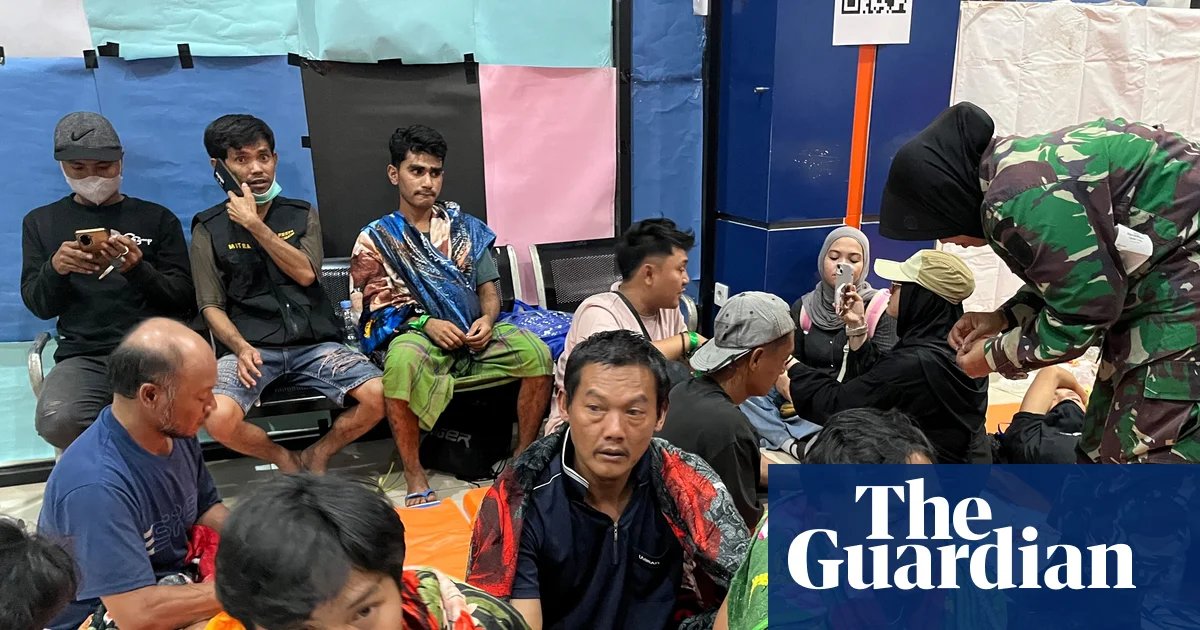
At least 16 killed after building in Gaza City damaged by Israeli strikes collapses
A building in Gaza City, housing displaced Palestinian families, collapsed on Wednesday following Israeli airstrikes, resulting in at least 16 fatalities. Rescue teams from Gaza's civil defense reported that among the victims were five children, and many others were believed to be trapped beneath the rubble. Fourteen injured individuals were transported to hospitals for treatment.
The multi-story building had previously sustained damage from Israeli strikes, compromising its structural integrity. Witnesses indicated that the collapse occurred when the building fell onto tents adjacent to it, where displaced families were sheltering.
The incident underscores the ongoing dangers faced by thousands of Palestinians living in buildings that have been damaged by airstrikes. Mohammed Abu Dan, a civil defense supervisor, noted that more than ten families were residing in the building, forced to stay there due to a lack of alternative shelter.
Search and rescue operations are being conducted under challenging conditions, exacerbated by a shortage of necessary equipment and resources. Palestinian and UN officials have attributed the difficulties to Israeli restrictions on Gaza, which they argue hinder the availability of heavy machinery for rescue efforts.
A video obtained by Reuters showed rescue workers attempting to pull individuals from the debris, while another video depicted a civil defense spokesperson carrying a young girl wrapped in a bloodstained scarf. Raed al-Dahshan, director of Gaza City's civil defense service, expressed hope as rescuers continued to hear voices from beneath the rubble.
The situation remains dire, with similar collapses occurring in the past two years, resulting in additional casualties. Many Palestinians have returned to partially destroyed homes or moved into abandoned buildings, despite the risks, due to rising rents and a lack of safe accommodation options.
Iranian security forces coordinated killing, torture and sexual abuse of protesters, says Amnesty
Amnesty International has released a report detailing systematic killings, torture, and sexual abuse perpetrated by Iranian security forces against protesters during the nationwide demonstrations that erupted in September 2022. The protests were sparked by the death of Mahsa Amini, a 22-year-old woman who died while in custody after being arrested by the morality police for alleged violations of hijab regulations.
The report, based on leaked state documents and interviews, reveals that Iranian authorities ordered a brutal crackdown on the protests, with instructions for a "firm and severe" response. Amnesty has verified the deaths of 377 protesters, including 56 children, and documented cases of sexual violence against detainees.
The report includes harrowing accounts of sexual abuse, with victims subjected to various forms of penetration and torture while in custody. Testimonies collected during and after the protests corroborate the findings, with reports of security forces deliberately targeting female protesters with lethal force.
Amnesty's findings highlight a culture of impunity that has allowed such abuses to continue unchecked. The organization identified 87 Iranian officials, including high-ranking individuals, as being complicit in the violent crackdown.
Agnès Callamard, Amnesty's secretary general, emphasized the need for accountability and the recognition of the coordinated nature of the abuses. The report underscores the ongoing human rights crisis in Iran and the urgent need for international attention and intervention.
The investigation's revelations reflect the broader context of repression faced by dissenters in Iran, particularly during the protests that have occurred since Amini's death. Amnesty's report calls for justice for the victims and accountability for those responsible for the state-sanctioned violence.
Saudi Arabia warns of ‘red line’ after Houthi drone intercepted close to holy city of Mecca
Saudi Arabia has announced that its air defenses intercepted and destroyed a Houthi drone that attempted to fly over Mecca, the site of Islam's two holiest sites. The Saudi-led military coalition emphasized that the security of Mecca is a "red line" and vowed to take necessary actions against the Houthi rebels.
The Iran-backed Houthis have been targeting Saudi territory, including oil pipelines and shipping routes, but they denied any intention to target Mecca. A spokesperson for the Houthis dismissed the Saudi claims as a "worn-out lie" that lacks credibility.
The conflict has escalated, with the Houthis recently claiming significant territorial gains in Yemen. Saudi military operations have intensified, with reports of approximately 450 airstrikes conducted in a single week. The Houthis also claimed to have shot down a Saudi F-15 fighter jet, although Riyadh has not confirmed this.
The ongoing violence poses a threat to Saudi oil exports, particularly as the Houthis have seized control of strategic areas along Yemen’s Red Sea coast. The situation is further complicated by recent attacks that disrupted Saudi oil supplies, including a strike on the east-west pipeline.
The rising tensions have raised concerns about the potential for broader conflict in the Middle East, with Saudi Arabia, Turkey, and Pakistan recently signing a defense pact. Pakistani Prime Minister Shehbaz Sharif condemned the drone attack on Mecca, expressing solidarity with Saudi Arabia.
However, officials from Pakistan and Turkey indicated that they had not yet received requests for military support from Riyadh in response to the Houthi escalation. The situation remains fluid, with fears that more nations could become embroiled in the ongoing conflict.
The Palestinian school under siege – podcast
Waheed Abu Naim, an English teacher at the Al Mughayyir boys' school in the West Bank, describes the challenges he faces while teaching in a village surrounded by settlers. Despite the difficulties, he finds joy in his role as a teacher, noting the enthusiasm and warmth of his students. However, the past year has been particularly tough due to escalating violence in the area.
The village is isolated, with military checkpoints limiting access for teachers and students. Waheed recalls the tragic killing of a 14-year-old student near the school, which profoundly affected him and the community. He himself lost a brother in the violence, highlighting the personal toll of the ongoing conflict.
Senior Middle East correspondent Emma Graham-Harrison reported on the alarming number of children killed by Israeli forces and settlers in recent years. She emphasizes the horror of targeting a school full of children, noting that the violence seems to be escalating rather than abating.
Waheed expresses concern for the future, fearing that the cycle of violence will continue. He reflects on the impact of the conflict on the educational environment, as students and teachers grapple with fear and uncertainty. The podcast highlights the resilience of educators like Waheed, who strive to provide a sense of normalcy amid chaos.
The situation in the West Bank remains precarious, with ongoing violence and tensions affecting daily life. Waheed's experiences illustrate the broader challenges faced by Palestinians in the region, including the struggle for education and safety. The podcast serves as a poignant reminder of the human cost of the conflict and the importance of supporting those who seek to educate the next generation amidst adversity.
Photo provided by : The Guardian
@hoju-korean.com Newsroom






![[Summary News] Michelin-Starred Restaurant Fined for Serving…](https://hoju-korean.com/data/world_news/20260916_210156_f2b5cddd.jpg)
![[Summary News] Lithuania and Denmark Face Increased Tensions…](https://hoju-korean.com/data/world_news/20260915_210120_b0971ee5.jpg)



![[Summary News] Swedish Elections Show Narrow Lead for Centre…](https://hoju-korean.com/data/world_news/20260914_210120_bdd5c6d8.jpg)






댓글목록0