












Discovery of Seven Women's Bodies Fuels Anger Over Femicide in South Africa
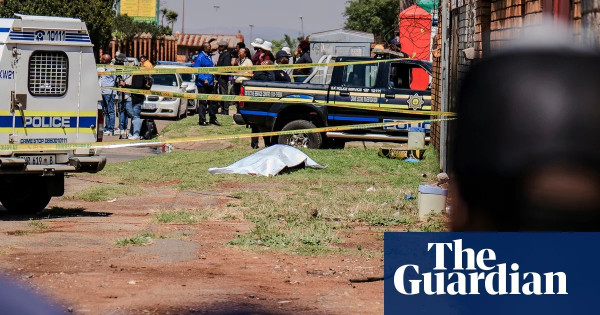
The discovery of seven women's bodies around Johannesburg’s international airport has ignited widespread fear and anger regarding the ongoing issue of femicide in South Africa. Among these, five bodies were found in the past week alone, prompting public outcry and demands for government action. Elizabeth “Tsontso” Moselakgomo, a 38-year-old runner who went missing on September 9, was identified as one of the victims. Her disappearance resonated widely on social media, leading to heightened concern among residents.
Authorities reported that four bodies were found in Kempton Park, across the highway from OR Tambo International Airport, since mid-July. All were discovered half-naked and showed signs of violence. In addition, two more bodies were recovered in Olifantsfontein, with another found in a deteriorated state 25 miles southeast of Kempton Park. The police have urged women in the area to refrain from walking or running alone, especially in isolated areas, and to remain vigilant.
Public reaction has been one of frustration, as women express their exhaustion from being told to take precautions for their safety. Advocacy groups, such as Women For Change, criticized the notion that women should be responsible for their own protection. They argue that measures must be taken by authorities to ensure safety and prevent such tragedies.
Despite the police's investigation into these murders, including a possible serial killer angle, there has been no confirmation of a serial killer. A police spokesperson stated that a suspect in the death of the first woman remains in custody, but the gender of suspects in the other cases has not been revealed. President Cyril Ramaphosa has directed police to prioritize the investigations, yet activists continue to demand a more robust response to gender-based violence.
The statistics regarding femicide in South Africa are alarming, with over 27,600 murders recorded in the year ending March 2024, including 5,578 women. The lack of progress in addressing this crisis has led to protests and calls for the government to take meaningful action against gender-based violence, which many believe is a national emergency.
Al-Qaida and IS-linked Violence in Africa's Sahel Region Expected to Reach Record Levels
Violence linked to Islamist extremist groups in Africa's Sahel region is projected to hit unprecedented levels this year, according to data from the conflict monitor Acled. This increase comes as the world marks the 25th anniversary of the 9/11 attacks, highlighting the sustained expansion of al-Qaida in Africa, particularly in Mali, Burkina Faso, and Niger.
Acled's statistics indicate a dramatic rise in violent incidents involving jihadist groups, escalating from 63 incidents in 2016 to a staggering 2,845 in 2025. This year alone has already seen 2,145 recorded events, suggesting a potential annual total exceeding 3,000 if current trends persist. Despite a global decline in terrorism-related deaths, the Sahel has experienced a sharp increase in fatalities.
The UN reported over 9,000 deaths from security incidents in Burkina Faso, Mali, and Niger in 2025, marking some of the highest terrorism death tolls worldwide. A notable joint offensive in Mali, involving al-Qaida-linked Jama’at Nusrat ul-Islam wa al-Muslimin (JNIM) and the Azawad Liberation Front, resulted in significant military casualties and territorial gains for the rebels.
Mali's defense minister was killed in a suicide attack, while the military faced setbacks, including the loss of control over strategic locations. JNIM's operations have expanded, leading to increased violence against both government forces and rival groups. In Burkina Faso, JNIM has claimed over 130 attacks this year, while in Niger, its activity remains lower compared to the Islamic State.
The ongoing conflict has been characterized by violence between rival factions, as well as attacks by government forces and Russian mercenaries. The situation is becoming increasingly dire, with the Sahel emerging as a focal point for extremist violence, raising concerns about regional stability and security.
Research Reveals Deep Financial Ties Between Britain’s Financial System and Slave Trade
New research indicates that the Bank of England and the broader British financial system were significantly intertwined with the transatlantic slave trade, involving the enslavement of millions of Africans. Historians compiling the Register of British Slave Traders have uncovered evidence that the financial system's involvement is more extensive than previously acknowledged.
Dr. Michael Bennett from the University of Sheffield found that 24 directors of the Bank were investors in the slave trade, with some among the founding directors when the Bank was established in 1694. The last of these, Christopher Puller, was involved in shipping weapons for the slave trade and co-owned a voyage that trafficked enslaved individuals from Gambia to Jamaica.
The research also highlights that at least 30 founding subscribers to the Bank invested in the slave trade, including the reigning monarchs William III and Mary II, who held shares in the Royal African Company. Bennett emphasized that the wealth generated from the slave trade was integral to the Bank's initial capital and the development of Britain's financial institutions.
The findings reveal that slave traders and their wealth were deeply embedded within London's financial corporations during the 17th and 18th centuries. Banks, including the Bank of England, provided essential financial services that supported the slave trade, with clients such as the Royal African Company and the South Sea Company.
Further studies by historians at University College London corroborate these findings, documenting the financial interests of past governors and directors of the Bank in the ownership of enslaved individuals. The research sheds light on the historical connections between Britain's financial system and its colonial past, prompting discussions about reparations and accountability for the legacy of slavery.
Communities Form Self-Defense Units Amid Rising Threats to Environmental Defenders
The murder rate of environmental and land defenders has reached alarming levels, with a defender killed approximately every three days last year, according to Global Witness. In response to this violence, many communities have established self-defense units to protect their members from organized crime and professional killers.
The report indicates that over a third of the 124 killings in 2025 were linked to organized crime, particularly in Latin America, where 85% of the deaths occurred. Colombia recorded the highest number of killings with 39, followed by Brazil with 26 and Honduras with 12. In Asia, the Philippines emerged as the most dangerous country for defenders, with 12 killings reported.
Since Global Witness began tracking these statistics in 2012, the total number of documented deaths and disappearances has reached 2,375, comparable to a small-scale war. Despite a decline in the overall number of killings in recent years, the report suggests that this figure may be an underestimate due to difficulties in data collection in conflict zones.
Many defenders face non-lethal attacks, including criminalization and smear campaigns, exacerbated by reduced international support. The report highlights the dismantling of USAID initiatives under the Trump administration, which previously aided Indigenous peoples in managing their land.
Almost three-quarters of the documented killings were of Indigenous individuals and small-scale farmers. In response to the escalating threats, communities like the Kakataibo Indigenous Guard in the Peruvian Amazon have formed self-defense units. Since 2020, six leaders from this community have been murdered, prompting the establishment of a guard that has grown to over 150 volunteers.
Segundo Ispón, the commander of the Kakataibo Indigenous Guard, emphasized the importance of defending their territory for their community and the environment. Similar self-defense initiatives have emerged in Colombia and Brazil, but the risks associated with such actions remain significant. The report underscores the urgent need for protection and support for those defending nature and land amid rising violence.
Photo provided by : The Guardian
@hoju-korean.com Newsroom







![[Summary News] Lithuania and Denmark Face Increased Tensions…](https://hoju-korean.com/data/world_news/20260915_210120_b0971ee5.jpg)



![[Summary News] Swedish Elections Show Narrow Lead for Centre…](https://hoju-korean.com/data/world_news/20260914_210120_bdd5c6d8.jpg)


![[Summary News] Calls for Economic Recovery in the UK, Challe…](https://hoju-korean.com/data/world_news/20260913_210116_21d9b846.jpg)



댓글목록0