













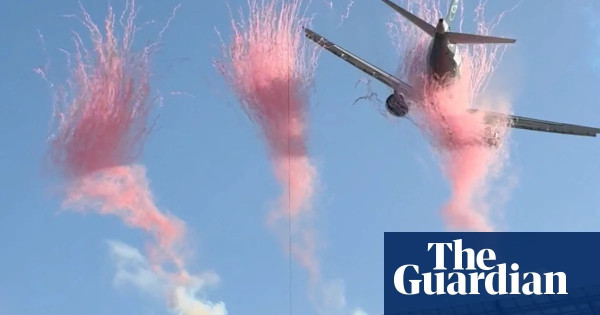
South African airline defends dramatic low-level flyby before rugby union clash
A pre-game stunt involving two passenger jets flying dramatically low over a stadium in South Africa drew cheers from approximately 56,000 spectators but ignited a debate over safety risks. The flyby, executed by two Embraer jets operated by Airlink, occurred on Saturday before the second rugby union Test between South Africa and New Zealand in Cape Town. Flight tracking service Flightradar24 reported that the lead jet passed just 41-46 feet above the roof of Cape Town Stadium. The second jet flew through a cloud of pink dust created for the show. Airlink, a sponsor of the South African rugby team, stated that the flyby adhered to safety regulations and was meticulously planned. The aircraft flew at 150 knots, and each jet had three senior captains onboard. Despite the airline's assurances, some aviation experts expressed concern about the low altitude, citing potential risks in case of an emergency. The tradition of stadium flybys in South African rugby dates back to the 1995 World Cup final, but this particular event drew heightened scrutiny due to its dramatic execution.
Nepal rescuers race to reach hundreds feared trapped in hydropower tunnels
Rescue teams in Nepal are urgently working to locate over 900 missing hydropower workers, many feared trapped in tunnels following devastating flash floods. The disaster, which occurred last Wednesday, has resulted in a death toll of 939, with an additional 16 fatalities reported in Tibet. Around 500 workers are believed to be trapped in tunnels of 12 hydropower projects in Rasuwa and Nuwakot districts. As rescue efforts continue, experts warn that the chances of finding survivors diminish as oxygen levels drop. Some workers had managed to call for help during the flooding, while others who escaped reported that many colleagues remained trapped. Complications in the rescue efforts arise from difficult terrain, high floodwaters, and damaged infrastructure, including over 40 destroyed bridges. The Nepali army is employing helicopters and blasting operations to reach trapped workers, while the damage to hydropower infrastructure has resulted in a loss of 700 megawatts of power capacity.
Border area between Nepal and China where 33 Australians are missing still almost entirely cut off
Nearly a week after catastrophic floods in Nepal, access to the area where many missing Australians were last heard from remains severely restricted. Gyirong Port, the border area between Nepal and China, was among the first to be impacted by the floods. Reports indicate that the area has been completely devastated, with essential infrastructure wiped out. As of Monday, the number of Australians missing rose to 43, with at least 33 believed to be near Gyirong Port just before the disaster struck. Family members of the missing have gathered in Kathmandu, anxiously awaiting updates. The last communication from one group was at 7:30 am on the day of the flood. Efforts to locate the missing have included sending teams up the Trishuli River and coordinating with Chinese rescue teams. The search has been challenging due to the hazardous conditions, with experts noting that the chances of finding survivors diminish significantly after the first 72 hours.
Photo provided by : The Guardian
@hoju-korean.com Editorial Team

























댓글목록0