













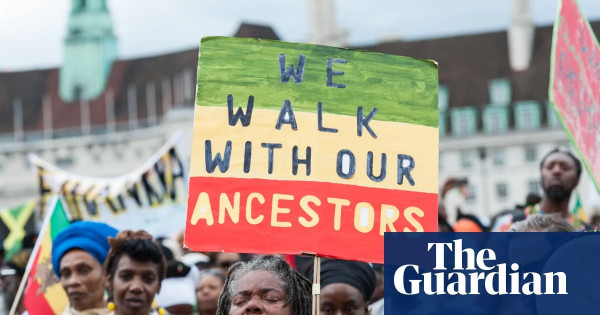
Countries legally obliged to consider slavery reparations, says UN committee
A UN committee has stated that countries are legally required to consider reparations for the transatlantic slave trade and to take measures addressing the lasting impacts of racial discrimination. Guidance released on Monday by the Committee on the Elimination of Racial Discrimination (CERD) indicated that these obligations stem from a legally binding 1965 convention on racial discrimination, rather than the legal standards in place during the time of the slave trade. The committee characterized this stance as a "paradigm shift," moving away from historical responsibility debates often used by governments to resist reparations claims.
The UN document emphasizes that "States parties must implement comprehensive reparatory measures for people of African descent, covering all aspects of remedies," and these guidelines may be cited in legal proceedings. Between the 15th and 19th centuries, at least 12.5 million Africans were forcibly removed and sold, which CERD described as the largest forced displacement in history.
International calls for reparations, including official apologies and financial compensation, have gained traction, although some argue that states and institutions should not be held accountable for historical wrongs. In March, the EU and Britain abstained from a UN resolution on slavery.
Some states have attempted to evade justice claims in court by arguing that there were no international laws prohibiting the slave trade at the time, a principle known as intertemporality. However, the UN document asserts that countries are still responsible under current international obligations to address the ongoing effects of slavery.
The document states, "Irrespective of the legal characterization of the original historical acts, states parties remain bound by their present obligations under the convention to address structural inequalities." It further notes that financial compensation alone is insufficient, advocating for "transformative" measures, which include opening archives, revising public memorials, and establishing independent truth commissions.
Pela Boker Wilson, a committee expert from Liberia who contributed to the document, expressed hope that states would move beyond mere apologies and reevaluate their policies and laws. "We are calling on state parties to take concrete and meaningful action," she told Reuters, emphasizing the need to acknowledge the dignity of those whose suffering has been overlooked or minimized.
Photo provided by : The Guardian
@hoju-korean.com Editorial Team
























댓글목록0