













US Leaders at COP30
More than 100 state and local leaders from the United States, including New Mexico Governor Michelle Lujan Grisham and Wisconsin Governor Tony Evers, will participate in the COP30 climate talks in Brazil. Organized by climate coalitions such as America Is All In and the US Climate Alliance, this delegation aims to showcase local climate efforts and economic development initiatives that prioritize clean energy. Governor Grisham highlighted the importance of grassroots action, stating that local leaders are committed to reducing greenhouse gas emissions while promoting economic growth. The delegation represents approximately two-thirds of the American population and over 50% of the nation's greenhouse gas emissions.
The recent elections in the US have also seen a surge in support for climate-conscious candidates, with over 30 climate mayors winning their races. This political shift reflects a growing public demand for effective climate action, contrasting with the federal government's current stance on fossil fuels. Activists have expressed hope that these developments signal a readiness for policies that align with climate justice and the phasing out of fossil fuels.
China's New Aircraft Carrier
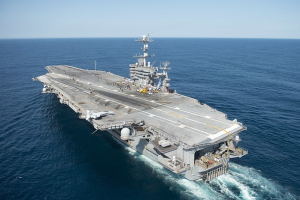
In a separate development, China has officially launched its latest aircraft carrier, the Fujian, which is the first of its kind to be designed and built domestically. The Fujian features advanced technology, including an electromagnetic launch system that enhances its operational capabilities. This carrier, alongside the older Liaoning and Shandong, positions China as a formidable naval power with the second-largest number of aircraft carriers globally, trailing only behind the United States.
The Fujian's launch capabilities allow for the deployment of heavier aircraft and faster sortie rates, significantly enhancing the People's Liberation Army's (PLA) operational reach, particularly in contested regions like the South China Sea and around Taiwan. Military analysts note that while the Fujian's configuration differs from US carriers, its advanced launch system is comparable to that of the latest US Navy Ford-class carriers.
Implications of Military Expansion
China's rapid naval expansion is seen as part of its broader strategy to assert dominance in regional waters and potentially prepare for military actions involving Taiwan. The PLA's ongoing modernization efforts and the development of new military technologies highlight the country's ambition to enhance its global military presence. This military buildup poses challenges for the United States and its allies, who are closely monitoring China's advancements.
Wrap-up
The contrasting narratives of US leaders advocating for climate action at COP30 and China's military expansion through the commissioning of the Fujian aircraft carrier highlight the complexities of global issues. As local leaders push for climate initiatives, China's military developments raise concerns about regional stability and security.
Sources
theguardian.com
@hoju-korean.com Editorial Team


























댓글목록0