











![[Summary News] Global Challenges: From Hantavirus Outbreaks to Human Rights Violations and Geopolitical Tensions](https://pixabay.com/get/g320140460658345fac2f748f483e21507077d05eee53112d6028997d80a52265f29fbbb93f7df99924de9e03e13c1febed1b46afdcdee46b758f1c83c353bc78_640.jpg)
Health Crisis in the Canary Islands
The MV Hondius cruise ship has become the center of a hantavirus outbreak, leading to the evacuation of over 100 passengers from various countries. Three passengers, including a Dutch couple and a German national, have died from the disease, which is typically spread by rodents. Health authorities in France and the US reported several positive cases among evacuated passengers. A French woman is in serious condition, while another American passenger has tested positive but remains asymptomatic. The evacuation operation has been described as complex, with passengers undergoing testing and isolation protocols upon arrival in their respective countries.
Disappearance Crisis in Mexico
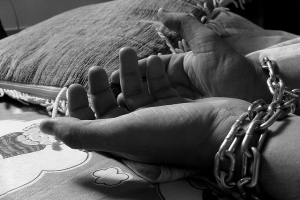
A report from the Inter-American Commission on Human Rights reveals a troubling trend in Mexico, where over 130,000 individuals have gone missing, often with state involvement. The report highlights that many disappearances are orchestrated in collusion with state agents, while others are directly carried out by government officials. The crisis has been exacerbated by organized crime, which frequently employs tactics such as forced disappearances and torture. Despite international scrutiny and calls for accountability, the Mexican government has denied the existence of state-sponsored disappearances, leading to widespread skepticism among human rights advocates.
US-Iran Tensions Escalate
Tensions between the US and Iran have intensified as former President Donald Trump rejected Iran's response to a US peace proposal as "totally unacceptable." The ceasefire established in April is showing signs of fraying, with reports of drone strikes and military actions in the region. Iran's counter-proposal included demands for lifting sanctions and ending the US naval blockade of the Strait of Hormuz. Trump's dismissal of the Iranian response raises concerns about the potential for renewed conflict, as Israeli Prime Minister Benjamin Netanyahu insists that military action will continue until Iran's nuclear capabilities are dismantled.
EU Criticism of Russian Actions
Kaja Kallas, the European Union's foreign policy chief, criticized Russian President Vladimir Putin's calls for a ceasefire in Ukraine, labeling them "very cynical." Kallas expressed concerns about Russia's ongoing influence in Europe and the need for vigilance against its operations in sports and cultural events. The EU continues discussions with major AI companies regarding regulatory measures, reflecting a broader commitment to addressing technological challenges posed by foreign entities.
Nazi-Looted Art Discovery
In a notable art recovery case, a portrait looted by the Nazis has been found in the possession of descendants of a Dutch SS collaborator. The painting, part of the Goudstikker collection, was discovered by art detective Arthur Brand. The family, initially unaware of the painting's history, is now considering returning it to the heirs of Goudstikker. This case highlights ongoing efforts to address the legacy of art looted during the Holocaust and the complexities surrounding restitution.
Wrap-up
This week has underscored the interconnected nature of global challenges, from public health emergencies to human rights violations and geopolitical tensions. The hantavirus outbreak serves as a reminder of the importance of public health preparedness, while the situation in Mexico raises urgent questions about accountability and human rights. Meanwhile, the escalating tensions between the US and Iran, along with the EU's stance on Russia, reflect the ongoing complexities of international relations. Lastly, the recovery of looted art signifies the continuing relevance of historical injustices in contemporary society.
Sources
theguardian.com
@hoju-korean.com Editorial Team
















댓글목록0