












![[Summary News] EU Considers Windfall Tax Amid Record Fuel Prices, Pussy Riot Member Reveals FSB Recruitment, and US-Denmark Security Pact Announced](https://hoju-korean.com/data/world_news/thumb-20260919_210121_9fac2f7d_600x315.jpg)
Record fuel prices across EU prompt calls for bloc-wide windfall tax on firms
European governments are contemplating a bloc-wide windfall tax on energy companies due to soaring fuel and gas prices, which are causing public unrest and political challenges, particularly from far-right groups. With elections approaching in eight EU countries, including France and Italy, leaders are under pressure to mitigate potential fallout from what analysts describe as one of the continent's most significant energy shocks in decades. German Finance Minister Lars Klingbeil urged the European Commission to propose ways to tax what he termed excessive profits from oil companies, demanding proposals by next month. Oil futures have surged above $100 per barrel, nearly 50% higher than pre-Iran war prices, as escalating Middle East conflicts threaten supply routes. Diesel prices in Germany hit an average of €2.45 per liter, while petrol reached €2.31 per liter, marking record highs. In the Netherlands, petrol prices soared to €2.73 per liter, with diesel averaging €2.78 per liter. Comparatively, petrol prices across the EU are 24% higher than last year, and diesel has increased by 38%. The EU's economic commissioner, Valdis Dombrovskis, stated there are currently no plans for an EU-wide tax mechanism but emphasized the commission's readiness to engage in discussions. High fuel prices are a pressing domestic issue in France and Italy, where voters are increasingly concerned about the cost of living. In Italy, Prime Minister Giorgia Meloni's coalition announced plans to eliminate road tax for millions of vehicles, redirecting funds to address rising fuel prices.
‘My fear was too great’: the Pussy Riot member recruited by Russian spies to inform on fellow activists
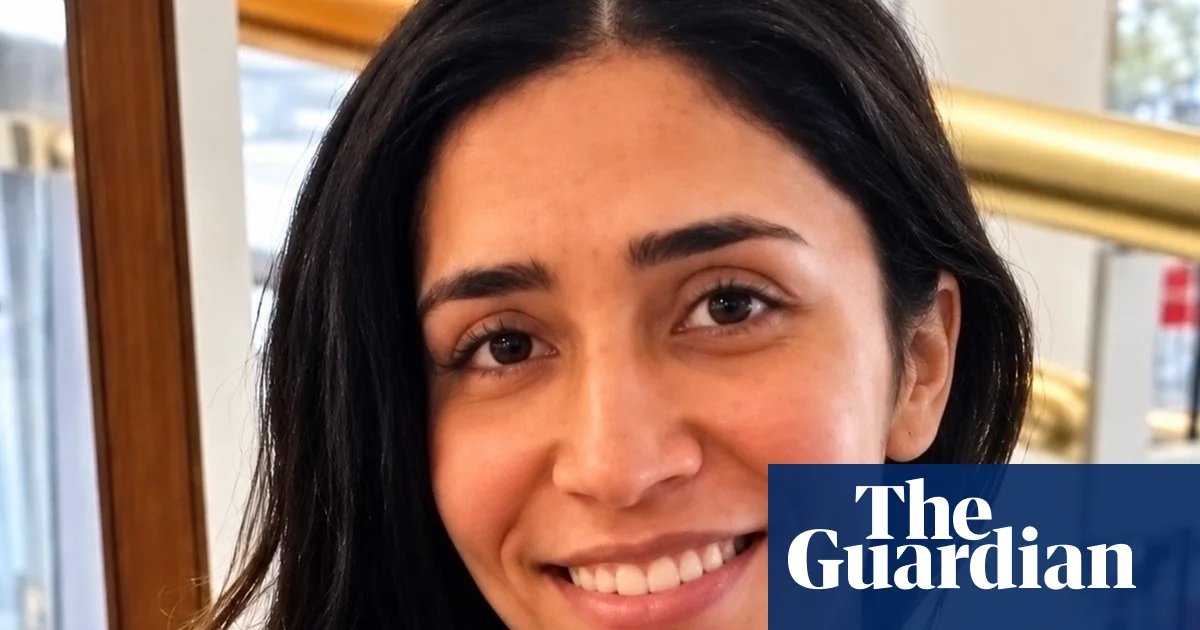
Rita Flores, a 29-year-old artist and former member of Pussy Riot, revealed her recruitment by Russia's FSB security service, detailing a harrowing experience of blackmail and threats. In a video discussion with her lawyer, Flores explained how she was coerced into cooperating with the FSB after being threatened with criminal charges and harm to her family. After fleeing Russia in August, she shared her story to encourage others in similar situations to break free from FSB ties. Flores, who has faced multiple detentions and surveillance since joining Pussy Riot in 2020, described her recruitment following a police search in February 2023, where FSB officers threatened her with severe consequences. She was initially offered a cash incentive for cooperation, which included gathering intelligence on fellow activists. Her handlers employed a good-cop, bad-cop strategy, with one officer known for his intimidating presence. Flores expressed relief at finally being able to speak out and emphasized the importance of sharing her experience to highlight the dangers faced by those in opposition to the Russian government.
US and Denmark reach security deal after Trump’s threats to take over Greenland
Former President Donald Trump announced a new Arctic security agreement with Denmark and Greenland, following his previous threats to annex Greenland. The specifics of the deal, described by Trump as "very important" and "historic," are expected to be finalized during the upcoming United Nations General Assembly in New York. In his announcement, Trump claimed the agreement grants the US permanent control over security matters in Greenland, which he argues addresses various US concerns. The US has maintained a military presence in Greenland since the Cold War and has rights to expand its bases there. Trump's announcement comes as he seeks to showcase foreign policy achievements ahead of the midterm elections, amidst increasing challenges from the ongoing conflict in Iran. Danish Prime Minister Mette Frederiksen and Greenland's leader Jens-Frederik Nielsen confirmed the deal, emphasizing its recognition of Greenland's sovereignty and the right to self-determination. They noted that the agreement does not fulfill Trump's previous desire for US ownership of Greenland. The pact will require parliamentary approval in Denmark and Greenland before implementation.
Latvia’s president warns that Europe is not up to date with drone and aerial warfare in Ukraine
Latvia's President Edgars Rinkēvičs warned that Europe is lagging behind in drone and aerial warfare capabilities, stating that most NATO countries would struggle to defend against Russian missile attacks if the conflict escalates. In an interview in Washington DC, he highlighted the rapid advancements in drone technology seen in Ukraine and the inadequacies of European air defense systems. Rinkēvičs noted that current preparations for aerial warfare could become obsolete within a year. He expressed concerns about delays in the supply of crucial air-defense missiles, including the US-made Patriot systems, which have been heavily used in the ongoing conflict. The US has been considering outsourcing Patriot production to Europe and Ukraine, but no agreements have been finalized. With the UN General Assembly approaching, discussions among NATO allies are intensifying regarding the potential for increased Russian aggression. Poland's Prime Minister Donald Tusk warned that Russia may test NATO's commitment to collective defense through strikes against member countries supporting Ukraine. Rinkēvičs emphasized the need for NATO to enhance its defense capabilities to counter potential threats.
Why Europe has been absent from the great AI safety debate
Europe faces a critical dilemma regarding artificial intelligence (AI), as Christine Lagarde, head of the European Central Bank, highlighted the continent's two options: either reject AI and miss out on growth or embrace it and become reliant on US and Chinese technologies. The ongoing debate on AI safety has intensified, with experts warning that the technology's implications will affect Europe regardless of its stance. Europe's absence from high-level discussions on AI safety is attributed to its inability to produce a major tech giant comparable to those in Silicon Valley. Ursula von der Leyen, President of the European Commission, announced plans to engage leading AI labs to support industry efforts in pacing AI development. Lagarde emphasized the necessity for Europe to develop its own AI technologies and data centers to reduce dependency on external powers. Margrethe Vestager, co-author of a report on AI strategy, echoed these sentiments, urging Europe to strengthen its AI capabilities to mitigate risks associated with reliance on foreign technologies. She stated that Europe must build its own AI ecosystem to retain talent and foster innovation while addressing potential existential threats.
From ovations in Venice to death threats in Israel: the extreme responses to NAZA documentary
The documentary "NAZA," produced by the Guardian, received a standing ovation at the Venice Film Festival, where it depicted the harsh realities of civilian casualties in Gaza. The film features testimonies from Israeli military insiders discussing the selection of targets in military strikes, raising significant ethical concerns. Following its screening, the film garnered applause for its powerful storytelling, but it triggered severe backlash in Israel. Right-wing politicians accused the filmmakers of treason, and Prime Minister Benjamin Netanyahu vowed to pursue legislation to strip citizenship from those who criticize Israeli soldiers. Demonstrators called for violence against the filmmakers and threatened their safety, leading to concerns from human rights organizations. The documentary's critical portrayal of military actions has sparked intense debate within Israel, reflecting the polarized views on the ongoing conflict in Gaza. Despite the acclaim it received internationally, the film's release has resulted in a hostile environment for its creators in Israel, showcasing the contentious nature of discussions surrounding the Israeli-Palestinian conflict.
Yemen’s anti-Houthi forces launch inquest into sudden military collapse
Yemen's anti-Houthi forces are conducting an inquest following a rapid military collapse during an anticipated offensive on Sana’a, the Houthi-controlled capital. Over 15 brigades were defeated, leading to the loss of the entire west coast to Houthi forces. Politicians have alleged that billions of dollars were offered to persuade defenders to abandon their positions, raising questions about the readiness and morale of the anti-Houthi coalition. The governor of Hadramaut claimed that significant financial incentives were involved, although the sources of these payments remain unclear. The Yemeni Nobel Peace Prize winner Tawakkol Karman has called for an investigation into the circumstances surrounding the retreat. Witnesses described the sudden withdrawal as a betrayal, with accusations directed at the leadership of the National Resistance Forces, which claimed the retreat was a tactical decision to avoid encirclement. The Houthis captured strategic locations, including military headquarters, highlighting the vulnerabilities within the anti-Houthi forces.
Iranian actor Laleh Marzban faces severe threats after Venice film festival speech
Iranian actress Laleh Marzban has faced severe backlash from Iranian authorities following her speech at the Venice Film Festival, where she highlighted the struggles of women in Iran. Marzban received the Best Newcomer award for her role in "Falling House," a film that addresses the oppression of women. During her acceptance speech, she dedicated the award to Iranian women enduring hardships, urging them not to lose hope. In response, the Supreme Council of the Cultural Revolution condemned her remarks, accusing her of presenting a biased view of Iranian society. State media have attacked Marzban, with some calling for her to be barred from working in Iran. Prominent figures in Iranian media have labeled her actions as hypocritical, while others have criticized her for not addressing other pressing issues. The reaction to her speech reflects the broader tensions surrounding freedom of expression in Iran, particularly in the context of women's rights and the government's response to dissent.
Trump administration again denies entry visas to Palestinian officials ahead of UN general assembly
The US State Department announced it has once again denied entry visas to Palestinian officials ahead of the upcoming United Nations General Assembly. The department cited the Palestinian Authority (PA) and the Palestine Liberation Organization (PLO) for failing to meet commitments and for actions perceived as undermining peace efforts. The announcement marks the second consecutive year that the Palestinian delegation has been barred from attending the UN gathering in person. Among those denied entry is Mahmoud Abbas, the president of the Palestinian Authority, who will address the assembly via video for the second consecutive year. The PA condemned the visa denials as unjustified, asserting that they contradict efforts to build trust and develop Palestinian-US relations. The UN General Assembly is scheduled to begin on September 22, with ongoing tensions surrounding the Israeli-Palestinian conflict influencing diplomatic discussions.
Photo provided by : The Guardian
@hoju-korean.com Newsroom






![[Summary News] EU Considers Windfall Tax Amid Record Fuel Pr…](https://hoju-korean.com/data/world_news/20260919_210121_9fac2f7d.jpg)

![[Summary News] Louisiana Firefighters Rescue African Serval …](https://hoju-korean.com/data/world_news/20260918_210155_9b862bd5.jpg)


![[Summary News] Canada and EU Strengthen Ties Amid US Threats…](https://hoju-korean.com/data/world_news/20260917_210129_3ec71c04.jpg)






댓글목록0