











Astronomical Details
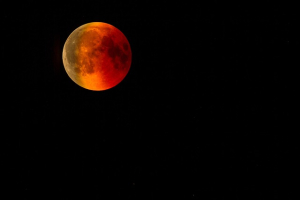
A total lunar eclipse occurs when the Earth aligns perfectly between the sun and the moon, blocking direct sunlight and casting a shadow on the lunar surface. Astrophysicist Dr. Rebecca Allen from Swinburne University explains that during this eclipse, some sunlight refracts through the Earth's atmosphere, giving the moon its distinctive red hue. Dr. Brad Tucker from the Australian National University describes this phenomenon as sunlight that "skims" the Earth's atmosphere, similar to the colors seen during sunrise or sunset.
Viewing Times and Locations
In Australia, the eclipse will be visible at various times across major cities. In Sydney, Canberra, Melbourne, and Hobart, the eclipse will begin at 10:04 PM and end at 11:02 PM. Brisbane will see the event from 9:04 PM to 10:02 PM, while Adelaide's viewing times are from 9:34 PM to 10:32 PM. Darwin offers an earlier viewing window from 8:34 PM to 9:32 PM, and Perth will see the eclipse between 7:04 PM and 8:02 PM. In New Zealand, the eclipse will reach its peak shortly after midnight, ensuring visibility across the entire country.
North America will experience the eclipse in the early morning hours of March 3. In New York and Washington, D.C., the event will start at 3:44 AM and conclude around 6:30 AM. Detroit will have a similar schedule, while New Orleans and Chicago will see the eclipse from 2:44 AM to about 6:24 AM. On the West Coast, San Francisco and Los Angeles will witness the eclipse starting at 12:44 AM and ending around 6:23 AM.
Global Visibility
Significant international cities will also catch a glimpse of the blood moon. Tokyo will see the eclipse from 5:44 PM to 11:23 PM, Beijing from 6:00 PM to 10:23 PM, and Manila from 5:57 PM to 10:23 PM. Jakarta's viewing times are from 6:06 PM to 9:23 PM. This total lunar eclipse is part of a series that occurs every 18 months to three years, with the next one scheduled for New Year's Eve in 2028, which will be visible to most of the world.
Wrap-up
The upcoming blood moon total lunar eclipse offers a unique opportunity for stargazers and astronomy enthusiasts to witness a spectacular natural phenomenon. As experts encourage people to find dark locations away from city lights for the best viewing experience, the event promises to be an unforgettable spectacle across multiple continents.
Sources
theguardian.com
@hoju-korean.com Editorial Team


























댓글목록0