














Andrew Hastie Engages in Dispute with Pauline Hanson Over Cartoon
Liberal frontbencher Andrew Hastie recently found himself at the center of a political controversy involving Pauline Hanson, the leader of the One Nation party. The dispute arose from an animated cartoon that depicted Hanson in a negative light. During a discussion, Barrie Cassidy and Sean Kelly, who was filling in for Tony Barry, examined whether Hastie is one of the few politicians willing to confront Hanson directly. This incident raises questions about the dynamics within the Liberal Party and the potential for a resurgence against One Nation's influence.
Hastie's willingness to engage in this dispute suggests a shift in strategy for the Liberal Party as it navigates its relationship with One Nation. The commentary also highlighted how media coverage of political figures, such as Warren Pickering's recent press conference, reflects differing public perceptions. The government continues to face scrutiny regarding grants awarded to a golf club in the prime minister's electorate, which further complicates the political landscape.
In response to the cartoon controversy, Hastie accepted an apology from fellow politician Barnaby Joyce, who had referred to him as a 'traitor' in relation to the cartoon. Meanwhile, Hanson has doubled down on her position, urging critics to 'chill' and downplaying the significance of the backlash. The ongoing tensions between these political figures illustrate the complexities of Australian politics, particularly within the context of media representation and public opinion.
The ABC and The Guardian have called on One Nation to reverse its media ban, citing concerns over censorship and the implications for democratic discourse. This call for transparency underscores the importance of open dialogue in political debates. The developments in this situation may signal a broader shift in how political parties engage with controversial topics and the media's role in shaping public narratives.
As the Liberal Party grapples with its identity and strategy, the implications of this dispute with Hanson could resonate beyond this particular incident, potentially influencing future political alignments and public perceptions of both parties involved.
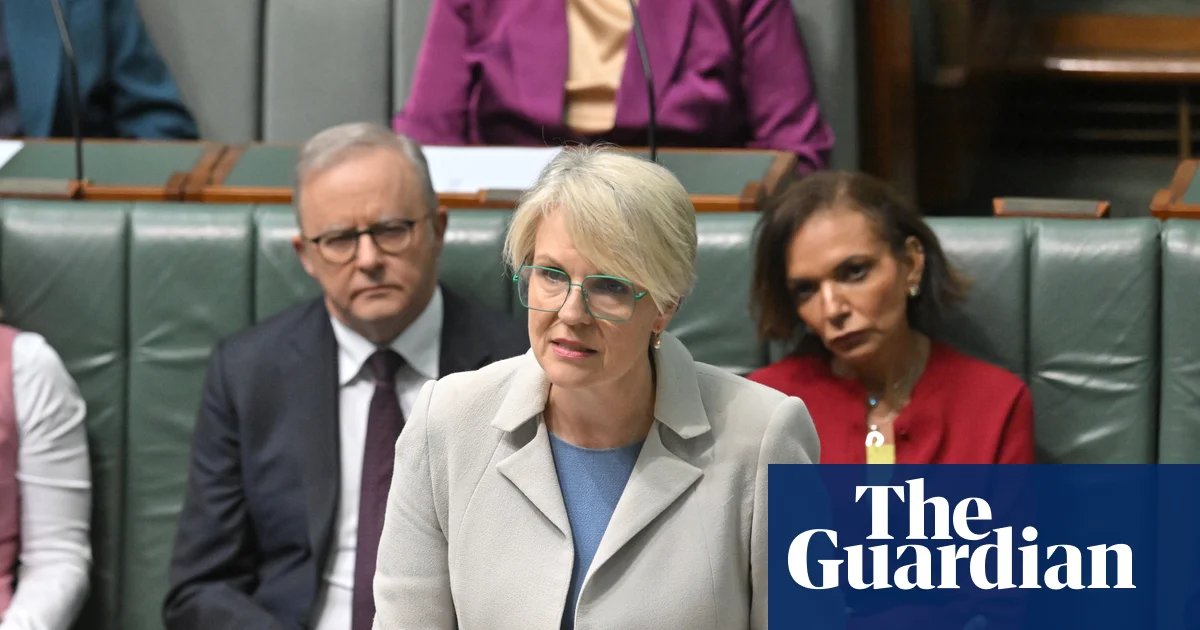
Tanya Plibersek Addresses Mother's Concerns on Domestic Violence Report
Social Services Minister Tanya Plibersek has responded to alarming statistics from Australia's latest domestic, family, and sexual violence report. In a recent statement, she shared a letter from a mother of three who expressed her fears about parenting in today's climate. The mother described her experience as akin to "standing at the edge of a field watching something unfold," highlighting the emotional toll of current societal issues.
The report reveals that incidents of sexual violence reached their highest levels ever in 2024, with only a slight decrease of less than 1% nationally in the past year. Over the past 15 years, reports of sexual violence have surged by 64%, raising significant concerns among policymakers and community leaders. Plibersek emphasized the urgent need for comprehensive strategies to address these rising figures and to support affected families.
In light of these statistics, Plibersek's remarks reflect a growing awareness of the ongoing crisis surrounding domestic and family violence in Australia. She reiterated the government's commitment to implementing effective measures aimed at reducing violence and providing support for victims.
The report serves as a sobering reminder of the challenges faced by many families and the importance of addressing these issues at both the community and governmental levels. The conversation around domestic violence is becoming increasingly critical, as more voices call for action and accountability in addressing this pervasive problem.
Additionally, the report's findings may prompt further discussions on the role of social media and technology in perpetuating violence, as Australia considers potential regulations to ensure safer environments for families.
Australia to Implement Targeted Measures Against Israeli Settler Violence
Foreign Affairs Minister Penny Wong has announced that Australia will collaborate with international partners to deter illegal settlements and settler violence in Israel. This decision comes amid ongoing tensions in the region, with Wong clarifying that Australia will not follow the United Kingdom in imposing a trade ban on goods produced in Israeli settlements in the West Bank.
Wong expressed concerns that a blanket ban could have unintended consequences for Australian businesses, Palestinians, and Israelis. The Australian government is focusing on targeted measures that address the root causes of violence without adversely affecting broader economic relations. Wong's statement reflects a nuanced approach to foreign policy, balancing humanitarian concerns with economic considerations.
The decision not to impose a trade ban aligns with Australia's long-standing position on the Israeli-Palestinian conflict, which advocates for a two-state solution. Wong's comments highlight the complexities of international diplomacy, particularly in relation to sensitive issues such as settlement expansion and human rights.
As Australia navigates its role in this geopolitical landscape, the government aims to contribute positively to peace efforts while maintaining its economic interests. The effectiveness of these targeted measures will depend on ongoing dialogue and cooperation with international partners.
The conversation surrounding Israeli settler violence and its implications for peace in the region continues to evolve, with many observers questioning the potential impact of Australia's stance on future negotiations.
Parents of Australian Surfers Attend Murder Trial in Mexico
Debra and Martin Robinson, the parents of two Australian surfers, attended the commencement of a murder trial in Mexico concerning the deaths of their sons. Callum and Jake Robinson, along with their American friend Jack Carter Rhoad, were killed in an incident in Ensenada, Baja California state. The trial involves three men accused of their murders, and the Robinsons traveled to Mexico to witness the proceedings firsthand.
The tragic event has garnered significant media attention, highlighting the dangers faced by tourists in certain regions. The Robinsons expressed their desire for justice for their sons, emphasizing the emotional toll of the loss on their family. The trial is expected to unfold over several weeks, with testimonies and evidence presented in court.
The case has raised awareness about violence against tourists and the need for improved safety measures in popular travel destinations. The Robinsons' presence at the trial underscores the personal impact of such tragedies on families and communities.
As the legal process continues, the Robinsons remain hopeful for a resolution that honors the memories of their sons. The trial's outcome may have broader implications for how such cases are handled in the future, particularly regarding the treatment of tourists abroad.
The attention surrounding the trial also highlights the importance of international cooperation in addressing crime and ensuring justice for victims and their families.
Research Reveals Extensive US Military Presence in Australia
A recent study by the Nautilus Institute has unveiled a significant presence of the United States military within Australia, raising concerns among analysts about the implications for national sovereignty. The research indicates that more than half of Australia's military facilities are accessible to US military personnel or defense corporations. This situation has led to discussions about whether Australia could be inadvertently drawn into military conflicts due to its close ties with the US.
The report includes a detailed map of US and Australian military bases across the country, highlighting key locations such as Pine Gap in the Northern Territory. This site is known for its secretive operations involving satellite communications and signals intelligence, established by the CIA in 1966.
Critics of the military collaboration argue that it represents a form of "colonization" of Australia's defense capabilities. They caution that such extensive foreign involvement could limit Australia's ability to make independent decisions regarding its military engagements.
As the debate continues, questions arise about the balance between security partnerships and national autonomy. The findings of the study may prompt calls for greater transparency and accountability regarding military agreements between Australia and the US.
The implications of this research extend beyond military strategy, touching on issues of national identity and the future of Australia's defense policies. As discussions unfold, the Australian government will need to navigate these complex dynamics to ensure that its interests are adequately represented in international relations.
Photo provided by : The Guardian
@hoju-korean.com Newsroom









![[Summary News] Australian Man Pleads Not Guilty to Murdering…](https://hoju-korean.com/data/aus_news/20260918_210120_3b4e924e.jpg)





![[Summary News] Australia Announces New Migration Plan, Outba…](https://hoju-korean.com/data/aus_news/20260917_210102_c01ade17.jpg)






댓글목록0